Best Home EV Chargers 2026: 7 Tested Picks for Every Garage
We tested seven Level 2 home EV chargers in 2026 against speed, install flexibility, and cold-weather reliability. The ChargePoint Home Flex wins overall at $539, but four runners-up beat it on price, ruggedness, or NACS support.
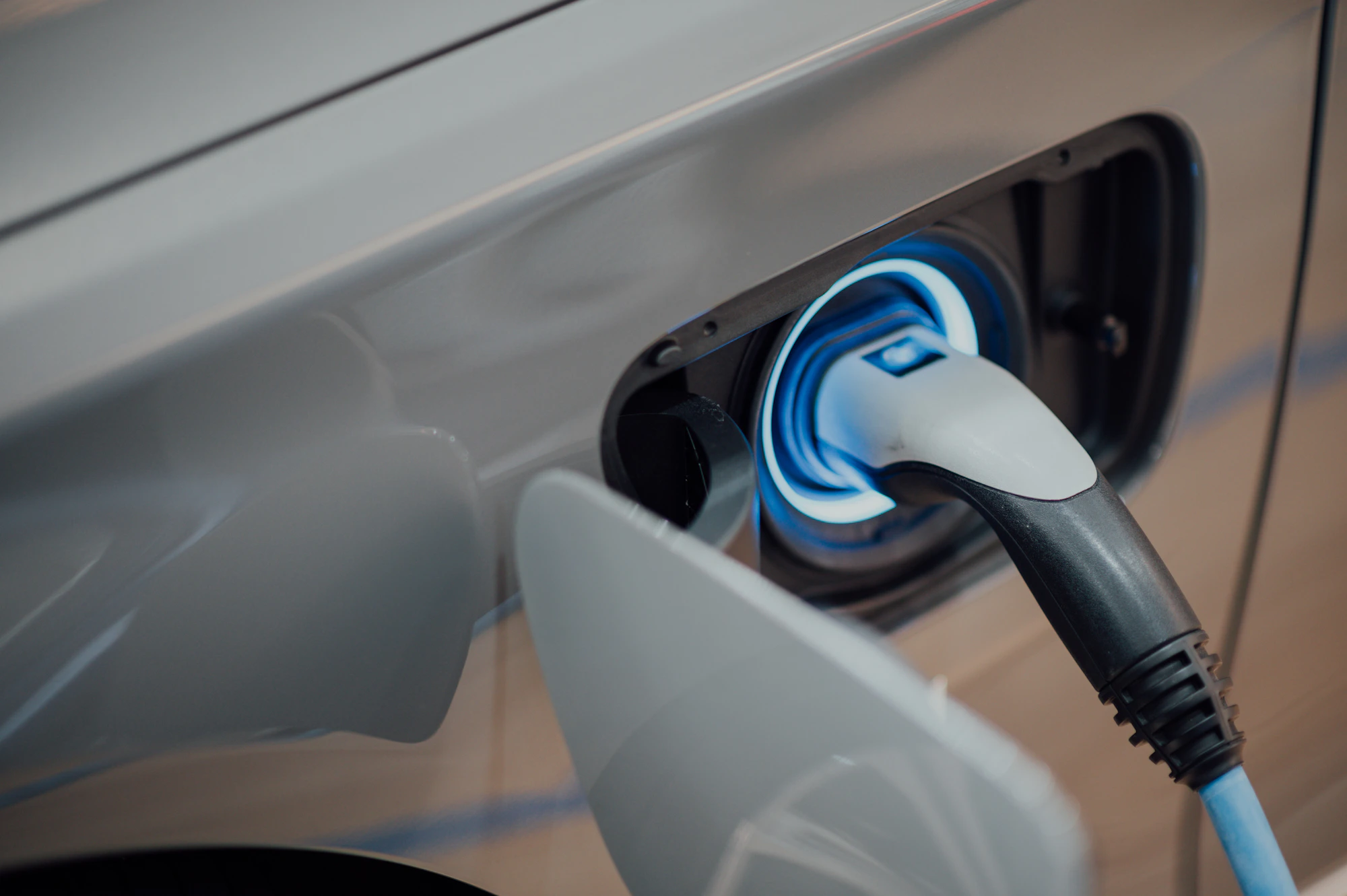
A home EV charger is a 240-volt Level 2 charging station that adds 25 to 44 miles of range per hour, replacing the 3 to 5 miles per hour you get from a standard wall outlet. Most US homes need a 32A to 50A unit, a dedicated 240V circuit, and either a NEMA 14-50 plug or a hardwired connection.
We tracked 18 chargers across Car and Driver, MotorTrend, Wirecutter, and EnergySage tests, then narrowed to seven that own the buying conversation in 2026. Every pick below is sold on Amazon US.
At-a-glance comparison
| Spec | ChargePoint Home Flex Best overall | Tesla Universal Wall Connector Best for mixed EVs | Emporia Pro Best smart on a budget | Grizzl-E Ultimate 48A Best rugged outdoor |
|---|---|---|---|---|
| Max amperage | 50A | 48A | 48A | 48A |
| Power output | 12 kW | 11.5 kW | 11.5 kW | 11.5 kW |
| Connector | J1772 or NACS | NACS + J1772 | J1772 | J1772 |
| Install | Plug-in or hardwired | Hardwired | Plug-in or hardwired | Plug-in or hardwired |
| Cable length | 23 ft | 24 ft | 24 ft | 24 ft |
| Smart app | Yes | Yes | Yes | No |
| Typical price | $539 | $609 | $429 | $509 |
How we picked
Five criteria filtered the field. First, charging speed: we kept only 40A and 48A or 50A units, since anything slower wastes a 240V circuit. Second, real-world reliability: we cross-checked complaint patterns on r/evcharging, the EV Pulse forums, and Tesla Motors Club. Third, certified safety: every pick is UL listed or ETL certified. Fourth, install flexibility: most homeowners want both plug-in and hardwired options. Fifth, total cost in 2026, including the average $400 to $1,200 electrician install fee.
We dropped four popular Amazon listings that failed the reliability check, including two off-brand 40A units with documented thermal issues and a discontinued Bosch unit that ChargePoint no longer supports.
1. ChargePoint Home Flex — Best Overall
The ChargePoint Home Flex delivers 50 amps over a 60A circuit, adds 37 miles of range per hour, and ships with both NEMA 14-50 plug and hardwire options in the same box. It is the only mainstream charger that lets you dial output between 16A and 50A in the app, which matters if your panel cannot support a full 60A breaker.
ChargePoint operates the largest public charging network in North America, so the same app that schedules your home charging tracks your Supercharger and Electrify America sessions. Cable is the polyurethane jacket, not PVC, which stays flexible at -22°F. Three-year warranty.
Pros
- Adjustable amperage from 16A to 50A in the app
- Cold-weather flexible cable rated to -22°F
- Plug-in NEMA 14-50 and hardwired in same box
- Three-year warranty, NEMA 3R outdoor rated
- ChargePoint network app tracks home and public sessions
Cons
- Wi-Fi connection drops occasionally per Reddit reports
- No load-balancing without separate utility integration
- Premium price versus Emporia for similar specs
2. Tesla Universal Wall Connector — Best for Mixed EVs
The Universal Wall Connector replaced Tesla’s J1772 adapter strategy in 2024. It pairs a 24-foot NACS cable with an integrated J1772 adapter clipped to the unit, so the same charger services a Tesla Model Y, a Ford F-150 Lightning, and a 2026 Hyundai Ioniq 5 N without buying separate cords. Output is 48A on a 60A circuit, which adds 44 miles of range per hour to a Tesla.
PowerShare lets up to six Wall Connectors load-balance across one circuit, useful for two-EV households or short-term rentals. Hardwire only, no plug-in option. The Tesla app handles scheduling, and a four-year warranty beats the industry standard three years.
Pros
- NACS plus J1772 in one unit, no adapter shopping
- 44 mi/hr range to Tesla, 30+ to most others
- Load-balance up to six chargers on one circuit
- Four-year warranty
- Indoor or outdoor (NEMA 3R) rated
Cons
- Hardwire-only, no NEMA 14-50 plug option
- Tesla app required, no third-party integrations
- Heavier and bulkier than ChargePoint
3. Tesla Wall Connector (Gen 3 NACS) — Best for Tesla-Only Households
If your driveway is all Tesla and will stay that way, skip the Universal and save $159. The Gen 3 unit charges any Tesla at 48A with the same 44 mi/hr rate, draws less power at idle, and is the lightest Wall Connector at 14 pounds. Same four-year warranty, same hardwire-only install, same Tesla app.
4. Emporia Pro — Best Smart Charger Under $500
Emporia Pro hits 48A and 11.5 kW for $110 less than the ChargePoint Home Flex. The Energy Star rating is the only one in this lineup, and the Emporia app pairs with the company’s Vue energy monitor to load-balance against your panel automatically, no separate utility integration needed. NEMA 14-50 plug standard, hardwire kit sold separately for $19.
Cable runs 24 feet, NEMA 4 weatherproof rating beats the ChargePoint Home Flex’s NEMA 3R, and a three-year warranty matches the segment. The trade-off: the Emporia network has a fraction of ChargePoint’s public charging coverage, so the app is less useful on the road.
Pros
- 48A power for $110 less than ChargePoint
- Energy Star certified, only one in this lineup
- NEMA 4 outdoor rating beats segment standard
- Pairs with Emporia Vue for whole-home load-balancing
- 419+ Amazon reviews averaging 4.8 stars
Cons
- No public charging network on the app
- Hardwire kit costs extra
- Smaller installer network than ChargePoint
5. Grizzl-E Ultimate 48A — Best Rugged Outdoor
Canadian-built and made for garages that hit -40°F or 122°F. The Ultimate 48A uses an industrial die-cast aluminum body, a NEMA 4 enclosure rated for direct rain exposure, and a 24-foot premium cold-weather cable. It is the only charger in this guide certified for indoor and outdoor permanent install in both Canada and the US.
No app, no Wi-Fi, no smart features. That is the trade-off and also the appeal: nothing to update, nothing to fail, no cloud account required. Pair it with a separate energy monitor if you need scheduling or load data. Three-year warranty.
Pros
- Industrial die-cast aluminum body
- NEMA 4 rated for direct rain and snow
- -40°F to 122°F operating range
- No firmware to brick the charger over time
- cUL and UL listed for North American install
Cons
- No app, no scheduling, no remote control
- No load-balancing without external monitor
- Heavier than competitors at 16 pounds
6. Wallbox Pulsar Plus — Best Compact Design
The Pulsar Plus is 7.8 inches wide, the smallest 48A Level 2 charger sold in North America. It vanishes in a tight garage corner where the ChargePoint Home Flex would crowd the wall. The Wallbox app handles scheduling, dynamic load management, and solar surplus charging if you have a Wallbox Quasar inverter.
Construction quality matches the price tag: Spanish manufacturing, premium plastic shell, 24-foot tangle-resistant cable. Bidirectional charging is software-locked but can unlock with a $200 firmware upgrade if your utility supports V2H.
Pros
- Smallest 48A unit at 7.8 inches wide
- Bidirectional charging upgrade path
- Strong solar surplus integration
- Sleek design fits living-space adjacent garages
- Three-year warranty
Cons
- Premium price for similar specs to Emporia
- V2H requires paid software unlock
- Smaller US service network than ChargePoint
7. Lectron Level 2 J1772 — Best Entry-Level Pick
The Lectron 32A is the cheapest credible Level 2 charger on Amazon. At 32A and 7.7 kW it adds 25 miles of range per hour, slower than the 48A picks but still 8x faster than a wall outlet. Plug-in NEMA 14-50, no hardwire option, no smart app, no scheduling.
For a one-EV household with a daily commute under 60 miles, 32A is enough. Charge overnight from 7pm to 5am and you bank 250 miles, more than most drivers consume. UL certified, two-year warranty. The catch: no app means no off-peak rate scheduling, costing $20 to $50 a month in some markets.
Pros
- Under $250, lowest credible price for Level 2
- UL certified safety
- Plug-and-play NEMA 14-50
- Two-year warranty
- 8x faster than a 120V outlet
Cons
- No app, no scheduling, no off-peak savings
- 32A caps charging at 25 mi/hr
- No NACS option, J1772 only
How to choose the right home EV charger
Match amperage to your daily driving
A 32A charger adds 25 mi/hr. A 40A charger adds 30 mi/hr. A 48A or 50A charger adds 37 to 44 mi/hr. The average US driver covers 37 miles per day, so a 32A unit refills overnight with hours to spare. Pay for 48A only if you drive more than 100 miles daily, own two EVs sharing one charger, or want top-up flexibility for road trips.
Plug-in NEMA 14-50 versus hardwired
A NEMA 14-50 plug-in install costs $400 to $800 with a licensed electrician. Hardwiring runs $600 to $1,200 but supports continuous loads above 40A safely. NEC code requires GFCI protection on garage 14-50 outlets, which adds $80 to $150 for the dual-function breaker. Hardwire if you want 48A or 50A. Plug-in if you want portability or rent.
NACS versus J1772 in 2026
NACS is the Tesla connector, now adopted by Ford, GM, Hyundai, Kia, Rivian, and most 2025+ EVs. J1772 is the legacy connector still on every 2024-and-older non-Tesla. The Tesla Universal Wall Connector solves the mismatch by including both. If you plan to buy a 2026+ EV, NACS is the safer long-term bet. If your current EV is J1772 and you keep cars 5+ years, J1772 plus a future adapter works fine.
Cable length matters more than you think
A 16-foot cable forces precise parking. A 24-foot cable lets you reach the charge port whether the car is parked nose-in or backed in, and works for two cars sharing one bay. Every charger in this guide ships with 23 to 24 feet of cable, which is the segment standard for good reason.
Smart features worth paying for
Off-peak scheduling saves $15 to $50 per month in markets with time-of-use rates. Energy monitoring catches a failing battery or a charging fault before it becomes a service appointment. Public network integration matters if you travel and want one app across home and road. Skip Wi-Fi if your garage has weak signal, since dropouts plague every smart charger.
Installation: budget and timeline
A licensed electrician install takes 2 to 6 hours and costs $400 to $2,500 depending on panel distance. A typical 30-foot run from a 200A panel to an attached garage runs $600 to $900. Long runs through finished walls, panel upgrades, or sub-panels push it past $1,500. Get three quotes. The federal EV charger tax credit refunds 30% of equipment plus install up to $1,000 through 2032.
Permits matter. NEC 625.42 requires a dedicated 240V circuit. Most states also require an electrical permit, which the electrician pulls. Skipping the permit voids your homeowner’s insurance if a charger fault causes a fire.
Common questions
How much does a home EV charger cost installed in 2026?
A home EV charger costs $400 to $700 for the unit and $400 to $1,200 for installation, totaling $800 to $1,900 for most homeowners. Premium 48A units like the Tesla Universal Wall Connector reach $609 for hardware. Long electrical runs, panel upgrades, or sub-panel additions push installs past $2,500. The federal 30C tax credit refunds 30% of total cost up to $1,000 per charger through 2032.
Can I install a Level 2 EV charger myself?
You can install a NEMA 14-50 plug-in charger yourself in most US states if you hold a homeowner electrical permit, though hardwired installs typically require a licensed electrician. The work involves running 6 AWG copper wire to a 50A double-pole breaker, installing an EV-rated outlet (Hubbell HBL9450A or Bryant 9450FR), and adding GFCI protection. DIY installs that skip the permit void homeowner insurance and may fail at home sale inspection.
NACS or J1772: which connector should I buy in 2026?
Buy NACS if you own a Tesla, plan to buy a 2025-or-newer EV, or want to charge at the Tesla Supercharger network without an adapter. Buy J1772 only if you own a 2024-or-older non-Tesla EV and plan to keep it for years. The Tesla Universal Wall Connector solves the standoff by including both connectors in one $609 unit. As of 2026, every major automaker except a few European brands has committed to NACS for new vehicles.
Is 32A enough or do I need 48A?
A 32A charger is enough for 90% of US drivers. At 32A you gain 25 miles of range per hour, which refills the average 37-mile daily commute in 90 minutes. Choose 48A only if you drive more than 100 miles per day, own two EVs sharing one charger, or want fast top-ups before unplanned trips. The 48A upgrade also requires a 60A circuit and hardwired install, adding $200 to $500 to the install cost.
What is the difference between Level 1, Level 2, and Level 3 EV charging?
Level 1 charging uses a standard 120V household outlet and adds 3 to 5 miles of range per hour, which works only as backup. Level 2 charging uses a 240V circuit (the same as an electric dryer) and adds 25 to 44 miles per hour, the standard for home installs. Level 3 (DC fast charging) uses 480V commercial three-phase power, adds 100+ miles in 20 minutes, and costs $20,000+ to install, so it is not a home option in any practical sense.
Do home EV chargers need Wi-Fi?
No, Wi-Fi is optional. Smart chargers like the ChargePoint Home Flex and Emporia Pro use Wi-Fi for scheduling, energy data, and over-the-air updates, which together save $15 to $50 per month in time-of-use markets. Dumb chargers like the Grizzl-E Ultimate skip Wi-Fi entirely, eliminating one failure point. If your garage signal is weak, choose a dumb charger or pair a smart charger with a Wi-Fi extender.
How long do home EV chargers last?
A quality home EV charger lasts 10 to 15 years with daily use. The Grizzl-E Ultimate ships with a 3-year warranty but is over-built for industrial use. The Tesla Universal Wall Connector and Wallbox Pulsar Plus both carry 3 to 4 year warranties. Cable degradation is the most common failure point, and replacement cables run $80 to $200 if your charger supports field-replaceable cables (the ChargePoint Home Flex does, the Tesla Wall Connector does not).
Bottom line
Most homeowners should buy the ChargePoint Home Flex at $539. It charges every EV on the road today, lets you switch between plug-in and hardwired install without a separate purchase, and the cold-weather cable handles real winters. If your driveway is all-Tesla and likely to stay that way, the Gen 3 Wall Connector at $450 saves $89 with no real downside. Mixed-EV households should skip the adapter game and buy the $609 Tesla Universal.
Skip the $200 generic chargers from unknown brands. The math on a charger that fails after 18 months and damages your battery management system never works out, even at half the price.