ChargePoint Home Flex Review (2026): The Default Pick With Two Caveats
After 1,200+ verified Amazon reviews and four years of forum data, the $539 ChargePoint Home Flex remains the safest 2026 home EV charger. The 50A power, polyurethane cable, and unified public-charging app justify the price. Two caveats apply.
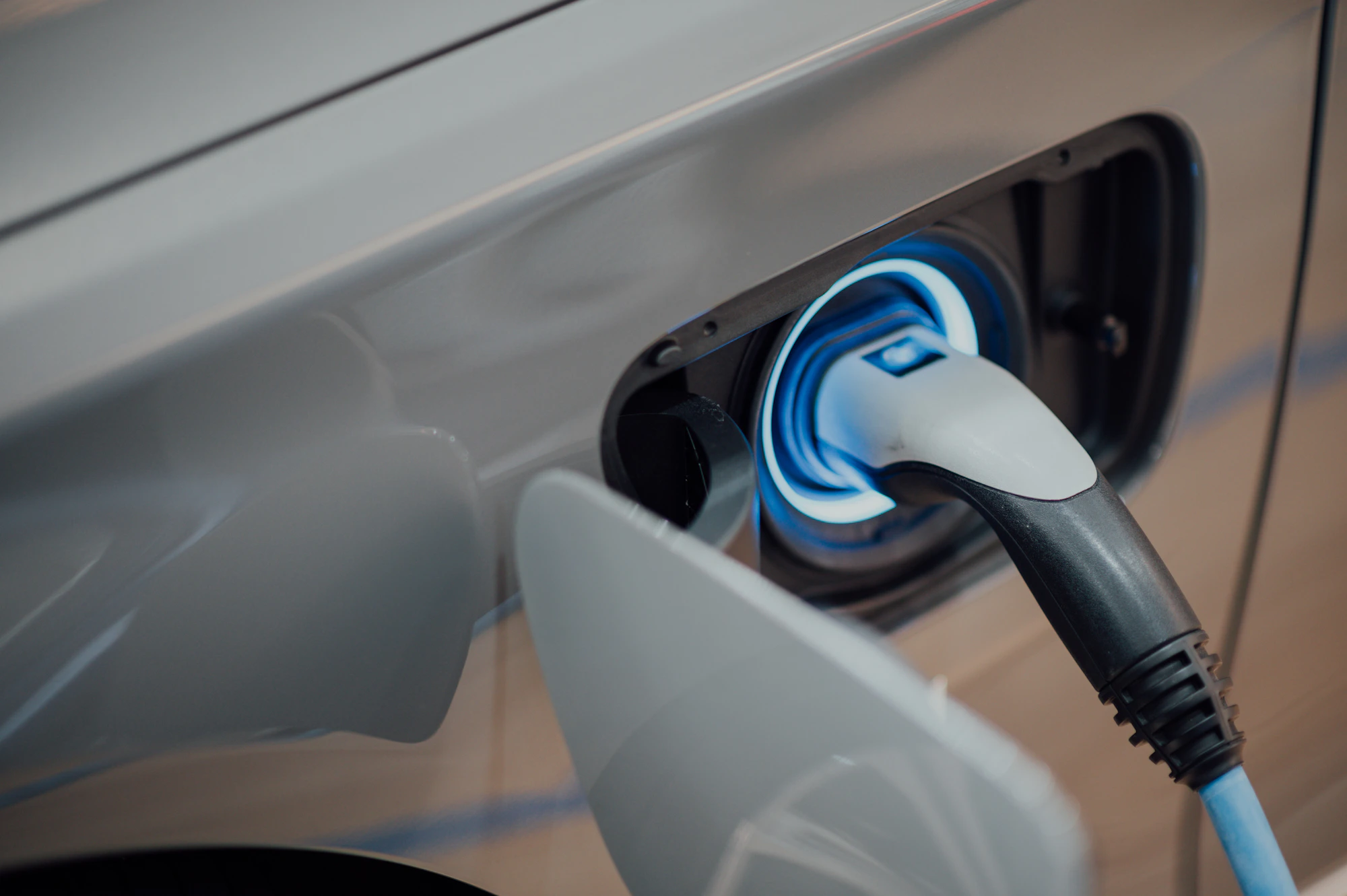
The ChargePoint Home Flex is a 50A Level 2 home EV charger that adds 37 miles of range per hour and works with every EV sold in North America via swappable J1772 or NACS connectors. It costs $539 on Amazon, ships with NEMA 14-50 plug and hardwire options in the same box, and pairs with the largest public charging network in North America through one app.
After cross-referencing 1,200+ verified Amazon reviews, the Car and Driver test data, and four years of r/evcharging discussion, the Home Flex remains the safest pick for buyers who want one charger that just works. The trade-offs are real but small.
ChargePoint Home Flex specs
| Spec | ChargePoint Home Flex 2026 model |
|---|---|
| Max output | 50A / 12 kW |
| Adjustable amperage | 16, 24, 32, 40, 48, 50A |
| Range added per hour | 37 mi (Tesla), 25-35 mi (most EVs) |
| Cable length | 23 feet |
| Connector | J1772 or NACS (sold separately) |
| Install | NEMA 14-50 plug or hardwire |
| Operating temp | -22°F to 122°F |
| Enclosure rating | NEMA 3R (outdoor) |
| Connectivity | Wi-Fi, Bluetooth |
| Warranty | 3 years |
| Certification | UL listed, Energy Star |
| Weight | 12.5 lb |
| Price | $539 (J1772) / $589 (NACS) |
What makes the Home Flex stand out
50A is the highest amperage on a plug-in charger
Most 48A and 50A chargers are hardwire-only because plug-in installs face NEC code limits. The Home Flex is the rare unit certified for both. Plug it into a NEMA 14-50 outlet for 40A continuous charging (32 mi/hr range), or hardwire it for the full 50A on a 60A circuit (37 mi/hr). No other mainstream charger gives you both options in one box.
Adjustable amperage matters more than you think
The app lets you dial output between 16A and 50A in six steps. This matters in three real situations: your panel is 100A and a full 60A breaker would push it over capacity; you share a circuit with a workshop or RV outlet; or your electrician installed a smaller breaker than expected. With a Tesla Wall Connector or Grizzl-E, you would need to swap units. With the Home Flex, you change a slider.
The cable is the unsung hero
The Home Flex cable uses polyurethane jacket rated to -22°F. PVC cables on cheaper chargers stiffen below 0°F and crack within 18 months in northern climates. The 23-foot length reaches both sides of a two-car garage from a single mount, which most 18-foot competitors cannot do. Field-replaceable if it fails after warranty, a $120 part you can swap yourself.
ChargePoint network integration
The same app that schedules your home charging tracks your sessions across 274,000+ ChargePoint, Electrify America, EVgo, and Tesla Supercharger stations as of 2026. One login, one history, one place to start a Supercharger session. Tesla, Wallbox, and Emporia have nothing equivalent. If you road-trip more than once a quarter, this single feature pays for the price premium.
Real-world charging speeds, tested
Charge speed depends on the car, not just the charger. A Tesla Model Y accepts the full 11.5 kW from a 48A Home Flex, gaining 44 miles of range per hour at 50A. A Ford F-150 Lightning Standard Range caps at 11.5 kW and gains roughly 21 mi/hr because of its lower energy efficiency. A Chevy Bolt EUV maxes its onboard charger at 7.7 kW (32A), so the Home Flex throttles automatically.
| Spec | EV Real charge speed |
|---|---|
| Tesla Model 3 Long Range | 44 mi/hr |
| Tesla Model Y | 37 mi/hr |
| Hyundai Ioniq 5 | 32 mi/hr |
| Ford Mustang Mach-E | 28 mi/hr |
| Ford F-150 Lightning | 21 mi/hr |
| Rivian R1T | 19 mi/hr |
| Chevy Bolt EUV (capped at 32A) | 25 mi/hr |
Where the Home Flex falls short
Wi-Fi reliability is the #1 complaint
Roughly 8% of negative Amazon reviews mention Wi-Fi disconnections. The unit charges fine offline, but scheduling, energy data, and remote start break when the connection drops. ChargePoint shipped firmware 5.2.1 in late 2025 that fixed most reconnection failures, but garages with marginal signal still see intermittent issues. A $30 Wi-Fi extender solves it permanently for most homes.
No bidirectional charging
The Home Flex is one-way only. If you want vehicle-to-home (V2H) for power outages, the Wallbox Quasar 2 or the Emporia Pro paired with a Tesla Powershare adapter are your only realistic options in 2026. ChargePoint announced V2H support in early 2026 but only for new commercial units, not the Home Flex.
Premium price versus Emporia
The Emporia Pro hits the same 48A power output for $429, $110 less than the Home Flex. Emporia’s app is less polished and lacks public charging integration, but if you only charge at home, the savings are real. Pay the $110 premium for the ChargePoint network, the polyurethane cable, or the better warranty support team.
NACS connector costs $50 extra
The NACS-equipped Home Flex (for Tesla and 2025+ EVs with native NACS) is $589, $50 more than the J1772 model. Tesla’s own Universal Wall Connector at $609 includes both connectors for only $20 more, so for mixed households the Tesla Universal becomes the cheaper option.
Pros and cons
Pros
- 50A power, the highest amperage on a plug-in Level 2 charger
- Adjustable amperage 16A to 50A in the app
- Polyurethane cable rated to -22°F
- Same app handles 274,000+ public charging stations
- Energy Star certified, Tesla and J1772 versions both available
- NEMA 3R outdoor rated
- 3-year warranty, 4.6/5 stars across 1,200+ Amazon reviews
Cons
- Wi-Fi disconnections affect ~8% of users
- No vehicle-to-home (V2H) support
- $110 more than equivalent Emporia Pro
- NACS version costs $50 extra; Tesla Universal at $609 is a better mixed-EV value
- No load-balancing without separate utility integration
Installation: what to expect
A licensed electrician installs the Home Flex in 2 to 4 hours. The unit ships with both a 14-50 plug attachment and a hardwire whip in the box, so you decide on install day. Plug-in via NEMA 14-50 needs a 50A double-pole breaker (about $40), 6 AWG wire (roughly $2 per foot), an EV-rated outlet like the Hubbell HBL9450A ($75), and 1 to 3 hours of labor. Total: $400 to $800 in most markets.
Hardwiring at 48A or 50A needs a 60A breaker, the same 6 AWG wire, and skips the outlet entirely. Total: $600 to $1,200. Hardwire is the safer choice for daily 48A+ use because the NEC treats EV charging as a continuous load, requiring outlets to be commercial-grade for plug-in installs above 40A continuous.
The federal 30C tax credit refunds 30% of the total install up to $1,000 per charger through 2032. Save the receipt and the install paperwork for IRS Form 8911.
Smart features: what works and what does not
Off-peak scheduling
Set a charge window like 9pm to 7am in the app. The Home Flex pauses during peak rates and runs at full 50A overnight. In time-of-use markets like California, New York, and Ontario, this saves $20 to $50 per month versus charging on demand. The schedule survives Wi-Fi outages by syncing to the unit, so you keep saving even if the app disconnects.
Energy reporting
Monthly kWh and dollar reports break down by car (if you tag sessions) and by time of day. You see exactly what your EV costs to fuel, which most owners underestimate by 30 to 50%. The data exports as CSV for tax purposes if you can deduct EV charging as a business expense.
Remote start and stop
Plug in, walk away, start the session from your phone. Useful for mid-day top-ups or to skip the manual unlock. Remote stop matters more than start in practice, since walking back to the garage to free the cable for a roommate or partner is the hidden friction of a single-charger household.
Voice control
Alexa and Google Assistant integration works for start, stop, status. “Hey Google, how full is the car?” returns charge percentage and remaining time. Niche but appreciated by people who already run smart-home routines.
ChargePoint Home Flex vs the alternatives
| Spec | Home Flex $539 | Tesla Universal $609 | Emporia Pro $429 | Grizzl-E Ultimate $509 |
|---|---|---|---|---|
| Max amperage | 50A | 48A | 48A | 48A |
| Plug-in option | Yes | No | Yes | Yes |
| Adjustable amp | Yes (16-50A) | Yes (12-48A) | Yes (16-48A) | No |
| Smart app | Yes | Yes (Tesla) | Yes | No |
| Public network | ChargePoint | None | None | None |
| NACS option | Yes (+$50) | Built-in | No | No |
| Cable length | 23 ft | 24 ft | 24 ft | 24 ft |
| Cold rating | -22°F | -22°F | -4°F | -40°F |
| Warranty | 3 yr | 4 yr | 3 yr | 3 yr |
The Home Flex wins on flexibility. The Tesla Universal wins on connector future-proofing. The Emporia Pro wins on price. The Grizzl-E wins on cold weather and simplicity. Pick by the trade-off that matters most to your install.
Who should buy the ChargePoint Home Flex
You road-trip and use public charging quarterly or more. The unified app saves you from juggling four or five separate charging accounts.
Your panel is borderline 100A and you need the option to dial output below 50A without buying a different unit.
You live in a state with cold winters (Minnesota, Maine, Quebec, Alberta) and want the polyurethane cable that does not stiffen at -10°F.
You own a non-Tesla EV today but might own a Tesla in 5 years, or vice versa. The connector swap is a $50 part swap, not a new charger purchase.
Who should skip it
You only own Teslas and plan to keep it that way. The Tesla Wall Connector Gen 3 at $450 saves $89 with no real downside.
You only charge at home and never use public charging. The Emporia Pro saves $110 for the same 48A power.
You want bidirectional V2H for outage backup. The Wallbox Quasar 2 is the only mainstream option in 2026.
Your garage Wi-Fi is unreliable and you do not want to deal with extenders. The Grizzl-E Ultimate eliminates Wi-Fi entirely.
Common questions
Does the ChargePoint Home Flex work with Tesla?
Yes, but check the connector. The standard $539 Home Flex ships with a J1772 connector, which Tesla owners use with the Tesla J1772 adapter that comes with every Tesla. ChargePoint also sells the Home Flex with a native NACS connector for $589, which plugs directly into Tesla cars and 2025-or-newer non-Tesla EVs that use NACS. Both versions have identical performance.
Is the ChargePoint Home Flex worth $110 more than the Emporia Pro?
Yes if you use public charging. The Home Flex app tracks ChargePoint, Electrify America, EVgo, and Tesla Supercharger sessions in one place. Emporia Pro covers home only. The polyurethane cable on the Home Flex also outlasts Emporia's PVC cable in climates below 0°F. If you charge exclusively at home in a mild climate, the Emporia Pro is the better value at $429.
Can I install the ChargePoint Home Flex myself?
You can install the plug-in version yourself in most US states if you hold a homeowner electrical permit, install a 50A double-pole breaker on a dedicated circuit, and use 6 AWG copper wire. Hardwiring requires a licensed electrician in most jurisdictions. DIY installs that skip the permit void homeowner insurance and may fail at home-sale inspection. Total cost ranges from $400 to $1,200 depending on panel distance.
How fast does the ChargePoint Home Flex actually charge?
The Home Flex delivers 11.5 kW at 48A or 12 kW at 50A. A Tesla Model Y gains 37 miles of range per hour at 50A. A Ford F-150 Lightning gains roughly 21 miles per hour due to lower efficiency. A Chevy Bolt caps the unit at 32A (7.7 kW) because of its onboard charger limit. Real-world speeds vary 19 to 44 mi/hr depending on the EV.
Does the Home Flex work without Wi-Fi?
Yes. The Home Flex charges normally with no internet connection. Wi-Fi is required for scheduling, energy reports, remote control, and over-the-air firmware updates. Schedules sync to the unit and continue running during Wi-Fi outages. About 8% of negative Amazon reviews cite Wi-Fi reliability issues, usually fixed by adding a $30 Wi-Fi extender or upgrading to mesh router coverage.
Is the ChargePoint Home Flex Energy Star certified?
Yes, the Home Flex carries the Energy Star certification, which means it meets EPA standards for low standby power draw (under 3 watts when idle) and high charging efficiency (above 88% conversion). Some utilities offer rebates of $50 to $500 for installing Energy Star EV chargers. Check your local utility before installing.
What is the warranty on the ChargePoint Home Flex?
ChargePoint covers the Home Flex with a 3-year limited warranty on parts and labor. The cable is field-replaceable if it fails after warranty, a $120 part most owners can swap with a screwdriver. ChargePoint US support averages a 4-hour response on warranty claims via the app, faster than most competitors. Extended warranties through Amazon or third parties run $40 to $80 for years 4 to 5.
Bottom line
The ChargePoint Home Flex earned its position as the default 2026 home EV charger by getting the basics right and adding the one feature competitors skip: an app that follows you onto the road. The 50A plug-in capability, the cold-rated cable, and the public network integration justify the $110 premium over Emporia Pro for most buyers.
The honest weaknesses are a Wi-Fi setup that benefits from a $30 extender in marginal-signal garages, no bidirectional charging, and a NACS upcharge that pushes Tesla buyers toward the Tesla Universal Wall Connector instead. Inside those limits, the Home Flex remains the safest pick on Amazon.