Jackery Explorer 2000 Plus Review: The Best-Value 2 kWh Power Station
The Explorer 2000 Plus is Jackery's first LFP-chemistry flagship: 2,042 Wh, 3,000 W output, expandable to 24 kWh, and the lightest 2 kWh-class unit on the market at 61.5 lb. Here's a full spec breakdown and where it sits in the segment.
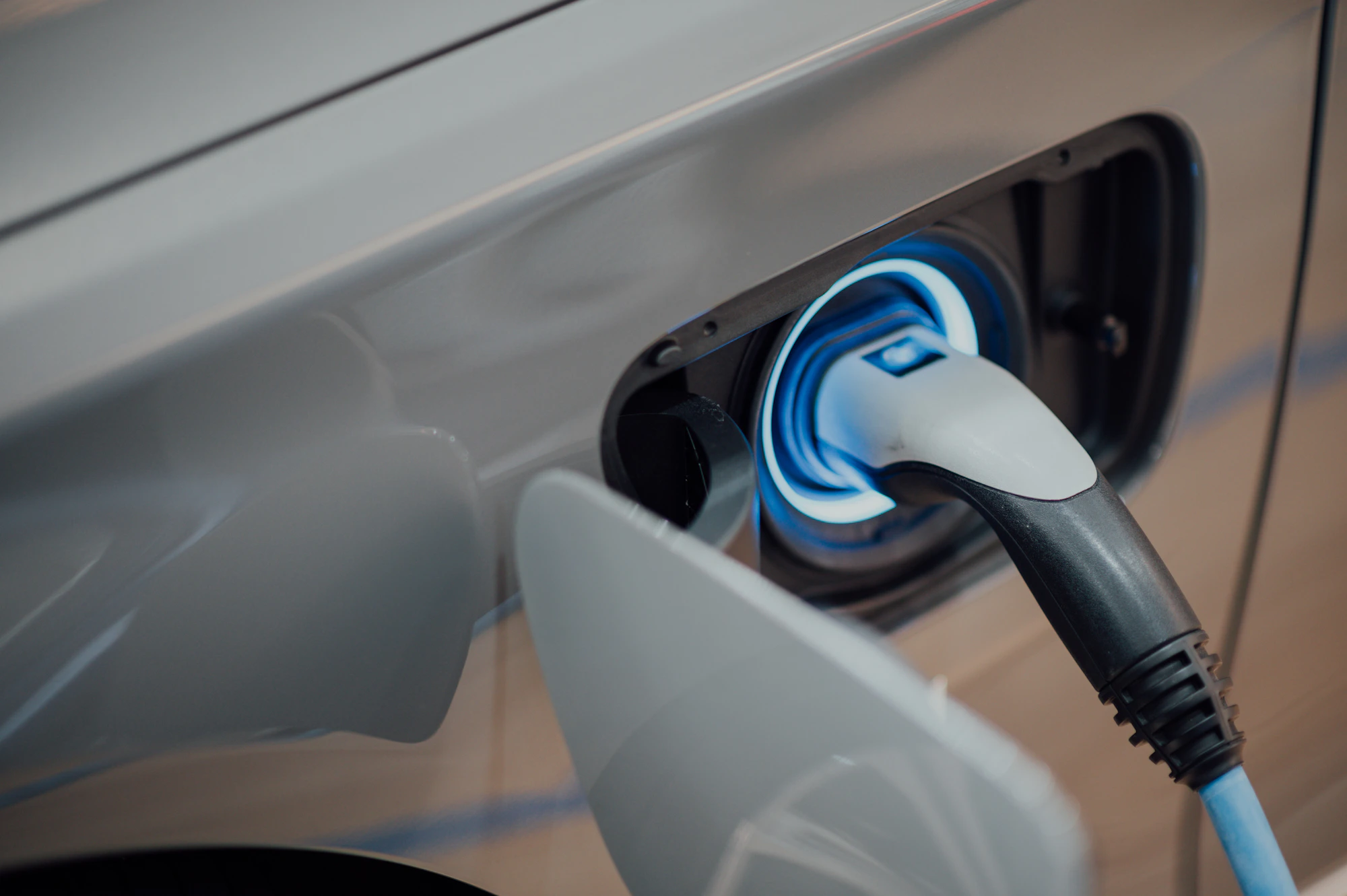
Jackery’s Explorer 2000 Plus is the unit that pulled the brand fully into the LFP era. Earlier flagship models, the Explorer 2000 Pro, the 1500 Pro, used NMC battery chemistry that capped at 1,000 charge cycles. The 2000 Plus replaces that with lithium iron phosphate (LFP) rated for 4,000 cycles to 80%, dropping the weight to 61.5 lb (the lightest 2 kWh-class unit you can buy), and keeping the price at $1,499.
This review covers the 2000 Plus spec sheet, its segment positioning, where it beats the Delta Pro and SOLIX F3800, and where the 3,000 W continuous output ceiling will bite.
What it is, in one sentence
A 2,042 Wh LFP portable power station with 3,000 W pure-sine output, modular battery expansion to 24 kWh, and the best weight-to-capacity ratio in the segment.
Specifications
| Spec | Explorer 2000 Plus Jackery, $1,499 |
|---|---|
| Battery capacity | 2,042 Wh |
| Battery chemistry | LiFePO4 (LFP) |
| Cycle life to 80% | 4,000 cycles |
| AC continuous | 3,000 W (pure sine) |
| AC surge | 6,000 W |
| AC outlets | 3 (120 V US) |
| USB-A | 2 (Quick Charge 3.0, 18 W) |
| USB-C PD | 2 (100 W each) |
| 12 V cigarette | 1 |
| DC outputs | Yes (DC5521 ×2) |
| Wall recharge time | 2.0 hours |
| Solar input max | 1,400 W |
| Solar recharge (1,400 W panels, full sun) | ~2.0 hours |
| Car recharge (12 V) | ~25 hours |
| Expansion batteries | Up to 5× B2000 Plus → 24 kWh total |
| Weight | 61.5 lb (27.9 kg) |
| Dimensions | 18.6 × 14.1 × 14.7 in |
| Warranty | 5 years |
| Operating temp range | 14°F – 104°F (-10°C – 40°C) |
Where it wins
Weight-to-capacity is class-leading
At 61.5 lb, the 2000 Plus is 34 lb lighter than the EcoFlow Delta Pro (3,600 Wh / 99 lb) and 70 lb lighter than the Anker SOLIX F3800 (3,840 Wh / 132 lb). Yes, those units have more capacity, but the 2000 Plus is still the only 2 kWh+ unit you can plausibly carry up basement stairs solo.
For dual-use (camping AND home backup), this matters. The Delta Pro and F3800 are basement-install units. The 2000 Plus moves with you.
Best dollar-per-watt-hour at this tier
$1,499 / 2,042 Wh = $0.73 per Wh. Compared to:
- EcoFlow Delta Pro: $2,799 / 3,600 Wh = $0.78 per Wh
- Anker SOLIX F3800: $3,799 / 3,840 Wh = $0.99 per Wh
- Bluetti AC200MAX: $1,699 / 2,048 Wh = $0.83 per Wh
Only the AC200MAX comes close, and at a higher price point with no weight advantage.
LFP chemistry with realistic cycle life
The 4,000-cycle rating to 80% capacity translates to roughly 11 years of daily cycling or 25-30 years of typical occasional-use ownership. The previous-generation Explorer 2000 Pro (NMC) bottomed out around 1,000 cycles, meaningfully shorter useful life.
Modular expansion path
The Explorer 2000 Plus accepts up to 5 expansion batteries (B2000 Plus, 2,042 Wh each) for a 24 kWh total stack. That covers most whole-home backup scenarios. Each expansion battery is itself stackable and detachable.
Where it loses
3,000 W continuous is the segment-low ceiling
The Delta Pro hits 3,600 W (4,500 W with X-Boost), the F3800 hits 6,000 W. For households that want to run a window AC + microwave + fridge simultaneously, the 2000 Plus may trip on the surge.
Practical math: a 5,000 BTU window AC + a 1,000 W microwave + a 200 W fridge cycle = 1,700 W continuous + 600-1,200 W microwave surge cycles. That fits within 3,000 W continuous but uses most of the headroom.
No 240 V split-phase
The 2000 Plus outputs single-phase 120 V only. If you have a well pump, water heater, dryer, central HVAC, or any 240 V hard-wired load, this unit cannot drive it. The F3800 (single unit) or paired Delta Pros (two units + hub) are the alternatives.
App lags the competition
Jackery’s app handles scheduled charging, charge percent display, and AC on/off. It does not offer the time-of-use rate optimization, multi-unit pairing, or integration depth of the EcoFlow or Anker apps. If you want the smart-grid features, this is not the unit for you.
Pros
- 2,042 Wh LFP at $1,499, best dollar-per-Wh in 2 kWh class
- 61.5 lb, lightest 2 kWh-class unit on market
- Expandable to 24 kWh with B2000 Plus modules
- 4,000-cycle LFP battery, 5-year warranty
- 1,400 W solar input ceiling matches segment competitors
Cons
- 3,000 W continuous ceiling, lowest of the flagship 2-3 kWh tier
- No 240 V split-phase (single-phase 120 V only)
- App is functional but less mature than EcoFlow/Anker counterparts
- Wall recharge slower than Delta Pro (2.0 hr vs 1.7 hr)
Who should buy it
- Apartment renters and townhouse owners wanting a one-time, dual-use power buy that handles fridge, lights, and electronics through 12-24 hour outages.
- Weekend campers and overlanders who need real capacity (1.5+ days off-grid use) without basement-install weight.
- Buyers who plan to expand later, the 24 kWh expansion ceiling makes this a buy-now-grow-later platform.
Who should skip it
- Anyone with hardwired 240 V loads (well pump, central HVAC, EV charger). Buy the F3800.
- Households that want to run a high-draw appliance stack continuously (3+ kitchen appliances on at once). The Delta Pro’s 4,500 W X-Boost or the F3800’s 6,000 W give you headroom.
- Smart-home enthusiasts who want time-of-use rate scheduling and advanced solar integration. EcoFlow and Anker have more capable software.
Frequently asked questions
Explorer 2000 Plus FAQ
How does the 2000 Plus compare to the older Explorer 2000 Pro?
The 2000 Plus replaces the 2000 Pro entirely. The Pro used NMC battery chemistry (about 1,000 cycles to 80%); the Plus uses LFP (4,000 cycles). Capacity is similar (2,042 Wh vs 2,160 Wh), but the Plus is roughly 7 lb lighter, supports modular expansion, and ships with a 5-year warranty (vs 3 years on the Pro). At equivalent pricing, the 2000 Plus is the strictly better unit. Don't buy the 2000 Pro new in 2026.
Can the 2000 Plus run a refrigerator?
Yes, comfortably. A typical 18-22 cubic foot fridge draws 100-250 W steady and surges to 600-1,200 W on compressor startup. The 2000 Plus's 3,000 W continuous and 6,000 W surge has more than 2× the headroom needed. At 200 W average draw, you'll get 8-10 hours of run time from the 2,042 Wh battery.
How fast does it charge from solar?
With 1,400 W of compatible solar panels in clear midday sun, expect 800-1,000 W of real input (roughly 65-75% derating from nameplate due to angle, temperature, cable loss). That fills the 2,042 Wh battery in 2-2.5 hours of clear sun. With 600 W of panels (more typical), figure 4-5 hours of clear sun. Cloudy weather extends this 2-3×.
Does it work with Jackery's older expansion batteries?
No. The 2000 Plus uses the new B2000 Plus expansion battery. It is not compatible with the older E2000 expansion battery (used with the Explorer 2000 Pro). Always verify expansion battery model match before buying.
Is there a quieter mode?
Yes, the 2000 Plus has a Quiet Charging mode that limits wall input to 700 W instead of the standard 1,800 W. This roughly halves fan noise during recharge, at the cost of doubling charge time. Useful for overnight charging in a tent or bedroom.
Bottom line
The Explorer 2000 Plus is the best-value flagship 2 kWh power station in 2026. It loses on raw output (3,000 W vs 3,600-6,000 W from competitors) and on app polish, but it wins decisively on weight, dollar-per-Wh, and modular expansion economics.
For households that want a dual-use unit (camping AND home backup) and don’t have hardwired 240 V loads, this is the right buy. For whole-home backup, step up to the Anker SOLIX F3800. For ecosystem maturity, step up to the EcoFlow Delta Pro.
Editor’s rating: 4.5 / 5
Last reviewed: May 2026. Pricing accurate at last check; verify on merchant page.