Goal Zero Yeti 1500X Review: The Premium Brand Aging Out of the LFP Era
Goal Zero Yeti 1500X review: 1,516 Wh, 2,000 W output, $2,000 MSRP. Honest take on whether the premium build justifies skipping LFP chemistry — and the units that beat it on price.
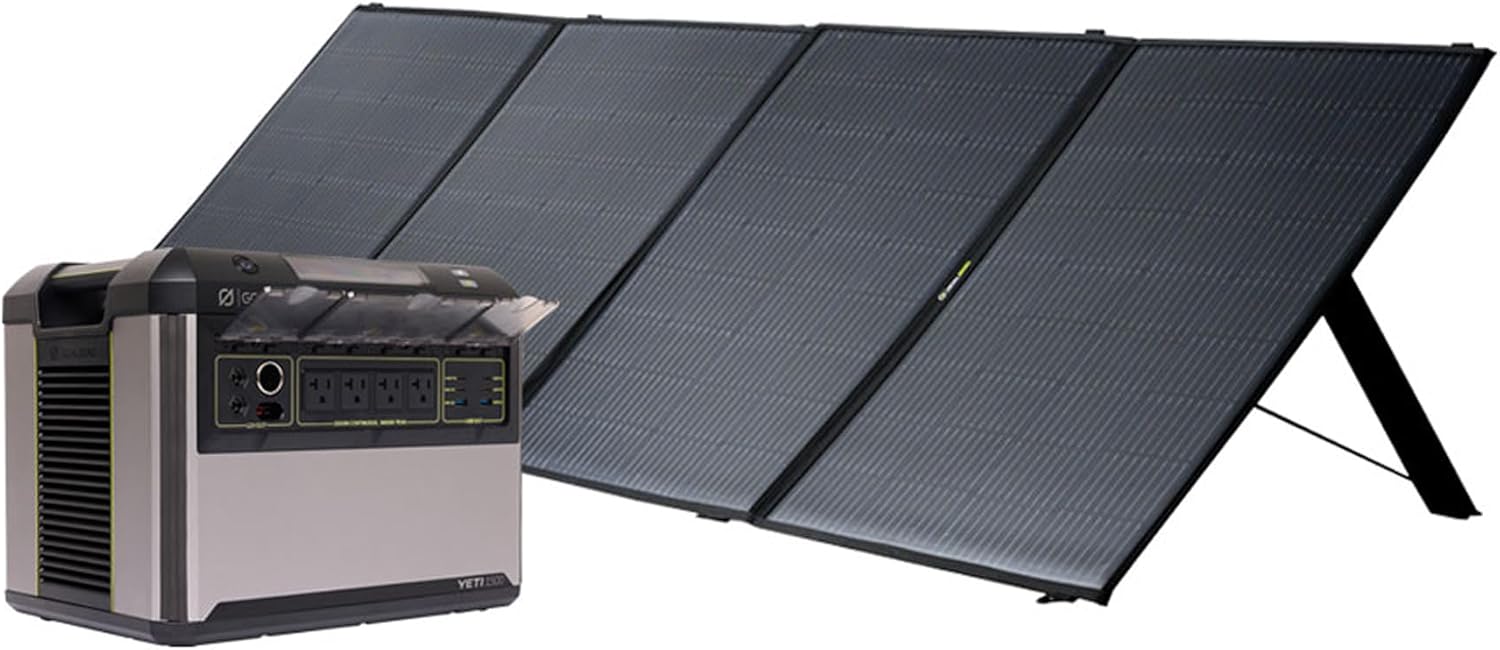
The Goal Zero Yeti 1500X earned its reputation in 2020-2022 as the premium portable power station the rest of the market measured itself against. Build quality, inverter design, port layout, and ecosystem support were all class-leading. Then LFP chemistry hit the segment, and the Yeti 1500X’s NMC battery — 500 cycles to 80% versus 3,000-4,000 cycles for LFP — became a structural disadvantage that Goal Zero hasn’t yet caught up on at this price point.
This review is honest about both: the Yeti 1500X is still a beautifully built unit with a great inverter, and it’s also no longer the rational pick at $2,000 MSRP when the Bluetti AC200L delivers more capacity, more cycle life, and more solar input for half the price.
What it is, in one sentence
A 1,516 Wh NMC-chemistry power station with a 2,000 W pure-sine inverter, premium aluminum build, and a mature accessory ecosystem — designed before LFP redefined the segment.
Specifications
| Spec | Yeti 1500X Goal Zero, $1,999 |
|---|---|
| Battery capacity | 1,516 Wh |
| Battery chemistry | Lithium-Ion NMC |
| Cycle life to 80% | 500 cycles |
| AC continuous | 2,000 W |
| AC surge | 3,500 W |
| AC outlets | 2 (120 V, 16.5 A) |
| USB-A | 4 (2 standard, 2 fast charge 18 W) |
| USB-C PD | 1 (60 W) + 1 (18 W) |
| 12 V cigarette | 1 (regulated, 13 A) |
| 12 V high-power port | 1 (Anderson) |
| Wall recharge time (default) | 14 hours via 120 W brick |
| Wall recharge (with Charger Plus, +$250) | 3 hours via 600 W input |
| Solar input max | 600 W |
| Solar recharge (600 W panels, full sun) | ~4 hours to 100% |
| Expansion batteries | Yes (Yeti Link + Tank Pro / Lead Acid) |
| Weight | 45.6 lb (20.7 kg) |
| Dimensions | 15.25 × 10.23 × 10.37 in |
| Warranty | 2 years |
| App control | Native Wi-Fi + Bluetooth |
Where it wins
Build quality you can feel
The Yeti 1500X uses a cast-aluminum chassis and a finish that holds up to actual abuse — drops, weather, transport. The handles are integrated and load-bearing. The buttons have tactile feedback. The display is sunlight-readable. For buyers who care that a $2,000 unit feels like a $2,000 unit, no LFP competitor in this tier matches the Yeti’s industrial finish.
2,000 W inverter with 3,500 W surge
The Yeti 1500X’s pure-sine inverter delivers a clean 2,000 W continuous and 3,500 W surge — class-leading for its release era and still competitive today. Motor-start surges (refrigerator compressors, well pumps, small AC units) handle without the voltage-droop tricks newer LFP units rely on. If you’re powering a 1,500 W microwave + 800 W refrigerator startup, the Yeti handles the combined load smoothly.
Mature ecosystem
Goal Zero has been selling solar panels (Boulder, Nomad), expansion tanks (Tank Pro, Tank Pro Optima), and a wide range of accessories for over a decade. If you already own Goal Zero gear or want a single-vendor solution with phone support that picks up, the ecosystem is the deepest in this segment.
Where it loses
NMC chemistry caps cycle life at 500
This is the Yeti 1500X’s structural problem. NMC batteries are rated for 500 charge cycles to 80% capacity. LFP batteries in competing units (Bluetti AC200L, EcoFlow Delta 2 Max, Jackery Explorer 2000 Plus) hit 3,000-4,000 cycles to 80%. Translated to real use: at one full cycle per week, the Yeti’s battery degrades to 80% in ~10 years. An LFP competitor’s battery hits the same degradation point at 60-75 years — long past the calendar-aging cap of the chemistry.
NMC also has more aggressive degradation at high temperatures and deep discharge. For buyers planning daily-cycle off-grid use, NMC is the wrong choice in 2026.
$2,000 MSRP, $1,800 street, vs $999 LFP competitors
The Yeti 1500X retails at $1,999. Street prices hold above $1,700. At that price, the Bluetti AC200L (2,048 Wh LFP, 2,400 W, $999 street) and EcoFlow Delta 2 Max (2,048 Wh LFP, 2,400 W, $1,099 street) deliver more capacity, more output, longer cycle life, and faster recharge — for roughly half the money. The Yeti’s $700-$900 premium buys premium build, not premium specs.
14-hour default recharge
The Yeti 1500X ships with a 120 W AC charging brick. Full recharge from empty: 14 hours. To get competitive recharge speed you need the optional Charger Plus accessory ($250) which raises input to 600 W and drops recharge time to 3 hours. The AC200L and Delta 2 Max include fast charging out of the box and hit full in 60-81 minutes.
2-year warranty
Goal Zero’s standard warranty is 2 years. Bluetti, EcoFlow, Jackery, and Anker SOLIX all offer 5-year warranties on competing LFP units. For a $2,000 purchase, the 3-year warranty gap is a real consideration.
Goal Zero Yeti 1500X vs the alternatives
| Spec | Yeti 1500X Goal Zero, $1,999 | AC200L Bluetti, $1,499 | Delta 2 Max EcoFlow, $1,899 |
|---|---|---|---|
| Capacity | 1,516 Wh | 2,048 Wh | 2,048 Wh |
| Chemistry | NMC | LFP | LFP |
| Cycles to 80% | 500 | 3,500 | 3,000 |
| AC continuous | 2,000 W | 2,400 W | 2,400 W |
| AC surge | 3,500 W | 3,600 W (Power Lifting) | 4,800 W |
| Wall recharge to 100% | 14 hrs (3 hrs w/ +$250 accessory) | 60 min | 81 min |
| Solar input max | 600 W | 1,200 W | 1,000 W |
| Weight | 45.6 lb | 62 lb | 51 lb |
| Warranty | 2 years | 5 years | 5 years |
| Street price | ~$1,799 | ~$999 | ~$1,099 |
Who should buy it
- Existing Goal Zero owners with Boulder panels, Tank Pro expansion units, or Yeti Link hardware. Brand-vertical integration justifies staying.
- Buyers who value build quality over spec sheets. The Yeti 1500X feels more premium than any LFP competitor in this tier.
- Single-use emergency backup buyers who will cycle the unit fewer than 50 times across its lifetime. NMC’s shorter cycle life doesn’t matter if you never use it.
- Brand-trust buyers who want US-based phone support and a known service path.
Who should skip it
- Daily-cycle off-grid users. NMC chemistry will degrade meaningfully within 5-7 years.
- Anyone shopping on price-per-watt-hour. Half-price LFP alternatives win on every spec except finish.
- Buyers planning to scale capacity. The Bluetti AC200L expands to 8,192 Wh; the Yeti’s expansion path via Tank Pro is more expensive per added Wh.
- Speed-recharge users. Out of the box, the 14-hour wall recharge is uncompetitive.
Frequently asked questions
Goal Zero Yeti 1500X FAQ
Why does Goal Zero still use NMC instead of LFP?
Goal Zero has stated they prioritize energy density (more capacity per pound/cubic inch) and cold-weather performance, both of which NMC delivers better than LFP. NMC at 45.6 lb for 1,516 Wh is denser than LFP equivalents at the same weight. However, the trade-off — 500 cycles vs 3,000-4,000 — has not aged well as LFP costs have dropped and competitors have closed the energy-density gap. Goal Zero's newer Yeti PRO series uses LFP.
How does the Yeti 1500X compare to the Yeti PRO 4000?
The Yeti PRO 4000 is Goal Zero's modern LFP flagship: 3,993 Wh, 3,600 W output, 4,000 cycles to 80%, expandable to 20+ kWh. It's a generational leap over the 1500X and competes directly with the Anker SOLIX F3800 and EcoFlow Delta Pro Ultra. The Yeti 1500X is the previous-generation NMC product; the Yeti PRO 4000 is the current LFP product. Goal Zero continues to sell both, but the 1500X is best understood as a remaining-inventory product.
Can the Yeti 1500X be installed for hardwired home backup?
Indirectly. The Yeti 1500X feeds a portable extension cord setup well. For hardwired backup, Goal Zero sells the Home Integration Kit (a transfer switch + branch circuit manager) that interfaces with the Yeti units — installation requires a licensed electrician. The setup is functional but more limited than EcoFlow Smart Home Panel or Anker Home Backup Kit, both of which support more circuits at lower combined cost.
Is the Yeti 1500X worth buying used?
Conditionally. NMC batteries lose 20% of capacity in the first 500 cycles. A used Yeti 1500X with 200+ cycles on it will have meaningfully less than 1,516 Wh of usable capacity. Check cycle count via the app before buying used. Sub-100 cycles + 50%+ discount off MSRP is reasonable; anything beyond that, buy a new LFP competitor instead.
What's the cold-weather performance like?
Good — better than most LFP competitors. NMC chemistry handles 14°F (-10°C) operation more gracefully than LFP, which derates output meaningfully below 32°F. For winter camping in genuinely cold conditions, the Yeti 1500X has a real advantage. For mainland US backup duty in mild garages and basements, the LFP units are fine.
Bottom line
The Goal Zero Yeti 1500X is a premium-build, premium-priced NMC power station that has been structurally outclassed by LFP competitors in the 1.5-2 kWh tier. At $1,799-$1,999 street, it costs roughly double the Bluetti AC200L while delivering 25% less capacity, 1/7 the cycle life, and slower recharge.
Buy it if you’re brand-loyal to Goal Zero or already invested in their ecosystem. For everyone else, the Bluetti AC200L or EcoFlow Delta 2 Max is the rational pick at half the price.
Editor’s rating: 3.6 / 5
Last reviewed: May 2026. Pricing accurate at last check; verify on merchant page.